A DMCA takedown is a formal request asking a website, platform or host to remove material that copies your work without permission. It comes from the US Digital Millennium Copyright Act of 1998, 17 U.S.C. § 512. The law protects hosts from being sued over what users upload, as long as they remove infringing material quickly once they get a valid notice. That is why most sites act on one.
How a DMCA takedown works
- You find a copy of your photo, video, music or writing that you did not authorise.
- You send a notice to the site's designated copyright agent or abuse address, identifying your work and the exact URL of the copy.
- The site removes or disables the material, usually telling the uploader.
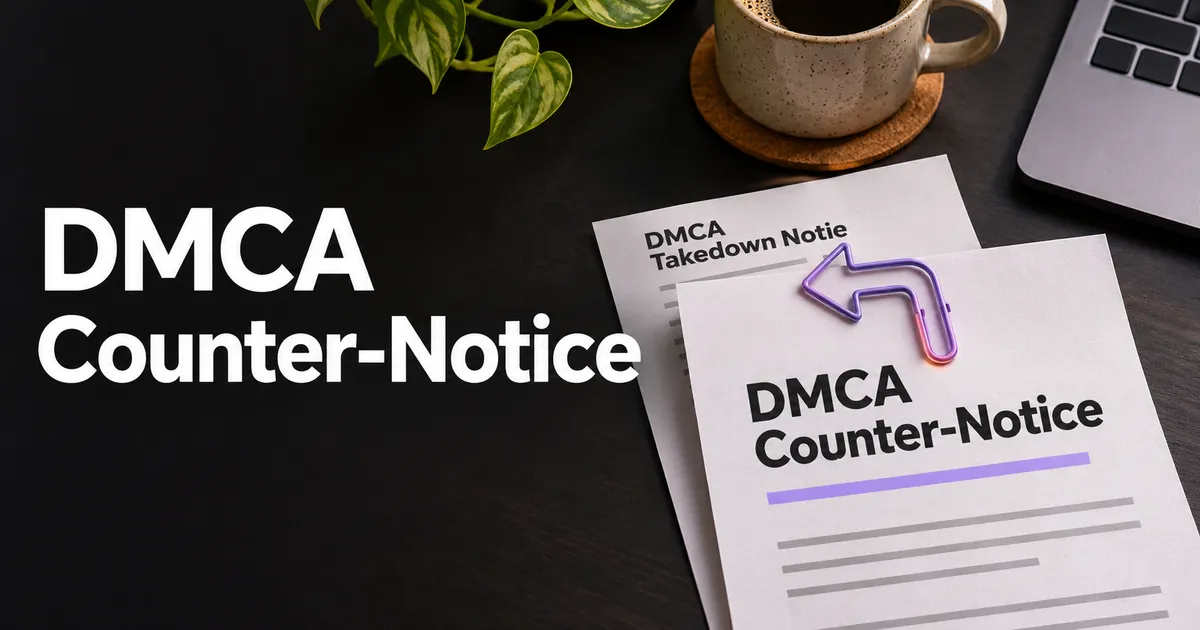
- The uploader can dispute it with a counter-notice, and the material can come back unless you go to court.
The same notice works on search engines. Google, for example, removes copyright-infringing pages from its results when it gets a valid DMCA notice, even if the site itself ignores you.
What must a DMCA notice contain?
Section 512(c)(3)(A) lists six elements. Leave one out and the site can treat the notice as incomplete.
- A physical or electronic signature of the owner or someone authorised to act for them. A typed full name works.
- The copyrighted work, or a representative list if many works were copied on one site.
- The infringing material, with enough detail to find it: the exact URLs.
- Your contact details.
- A statement that you have a good-faith belief the use is not authorised.
- A statement that the notice is accurate and, under penalty of perjury, that you are authorised to act for the owner.
Our DMCA takedown notice template has all six ready to copy, and the free notice generator fills them in for you in your browser.
What is a DMCA strike?
A strike is a penalty a platform places on the account that uploaded the infringing material. The word does not appear in the law. It comes from the rule that hosts must have a policy for closing the accounts of repeat infringers (§ 512(i)), and each platform designs its own.
YouTube's is the best known. A copyright strike can expire after 90 days, once the uploader completes YouTube's Copyright School, and an account with three active strikes is subject to termination. The uploader can clear a strike early if the person who filed retracts it, or by sending a valid counter-notice.
What happens after you file?
The law asks hosts to act "expeditiously" but sets no deadline. In practice:
- Large platforms and search engines usually reply within days, by email, with a reference number.
- Small sites may take longer, ask for more detail, or not reply at all.
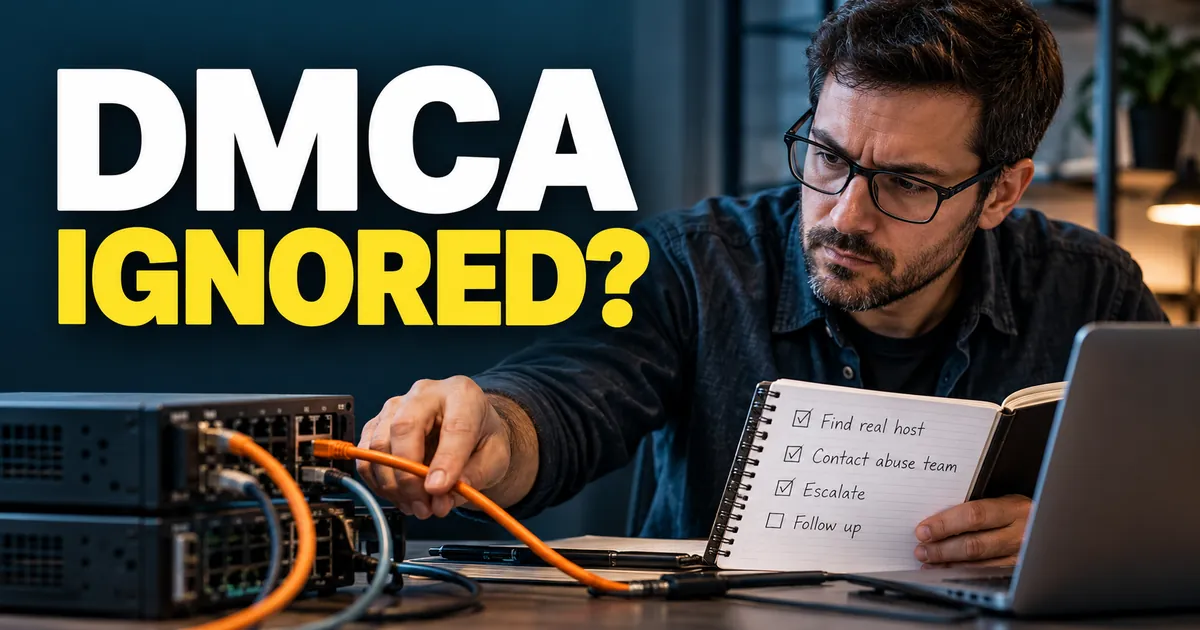
- Sites hosted outside the US may follow their own country's rules or ignore DMCA notices. Their hosting company or Google is then the better target.
Many hosts pass your notice, including your name, to the uploader. Google may also send copies of copyright notices to the public Lumen database, with the sender's name, although never the contact details from the form.
Can it be rejected or counter-noticed?
Rejected: yes. The common reasons are a missing element, a link to a profile or search page instead of the exact copy, or a claim the site thinks is fair use. Fix the gap and send it again.
Counter-noticed: also yes. Under § 512(g), the uploader can send a counter-notice stating, under penalty of perjury, that the removal was a mistake. The site then tells you and can restore the material 10 to 14 business days later, unless you tell it you have filed a court action.
Notices have to be honest. Under § 512(f), anyone who knowingly makes a false claim is liable for the damages it causes, including the other side's legal costs.
When a DMCA takedown is the wrong tool
Copyright belongs to whoever created the work. If someone else took the photo, or the images are intimate and were shared without your consent, a privacy or non-consensual imagery report is the right route, and it works whoever owns the copyright. Our removal workflow guide explains how to pick between them.
Filing for you
takedowns sends DMCA notices from our legal mailbox, under our own name rather than yours, follows up, and re-checks every link. Plans start at $19/month, or we remove 5 links from $12 with no subscription. Survivor cases are free.
Frequently asked questions
What is a DMCA takedown in simple terms?
It is a formal request telling a website or host that it is showing your copyrighted work without permission, and asking it to remove it. Under US law, a host that removes the material quickly keeps its protection from being sued over what its users upload.
What is a DMCA strike?
A strike is a penalty a platform puts on the account that uploaded the infringing material. It is a platform rule, not part of the law. On YouTube, a copyright strike can expire after 90 days, and three active strikes put the channel at risk of being closed.
Does the DMCA apply outside the United States?
The DMCA is a US law, but most large platforms, search engines and hosts accept DMCA-style notices from anywhere. Many other countries have their own notice-and-takedown rules, and sites hosted outside the US may follow those instead or ignore notices.
Can I file a DMCA takedown for a photo of me that someone else took?
Usually not. Copyright belongs to the person who took the photo. If it is an intimate image shared without your consent, a privacy or non-consensual imagery report is the right route, and it does not depend on owning the copyright.
What is the difference between a DMCA notice and a DMCA complaint?
In everyday use they mean the same thing: the written notice you send to a host or platform. Some sites call their web form a "DMCA complaint". A lawsuit for copyright infringement is something different and goes to court.